
Well, Water Tap or Irrigation Rights? What La Plata County Buyers Need to Know
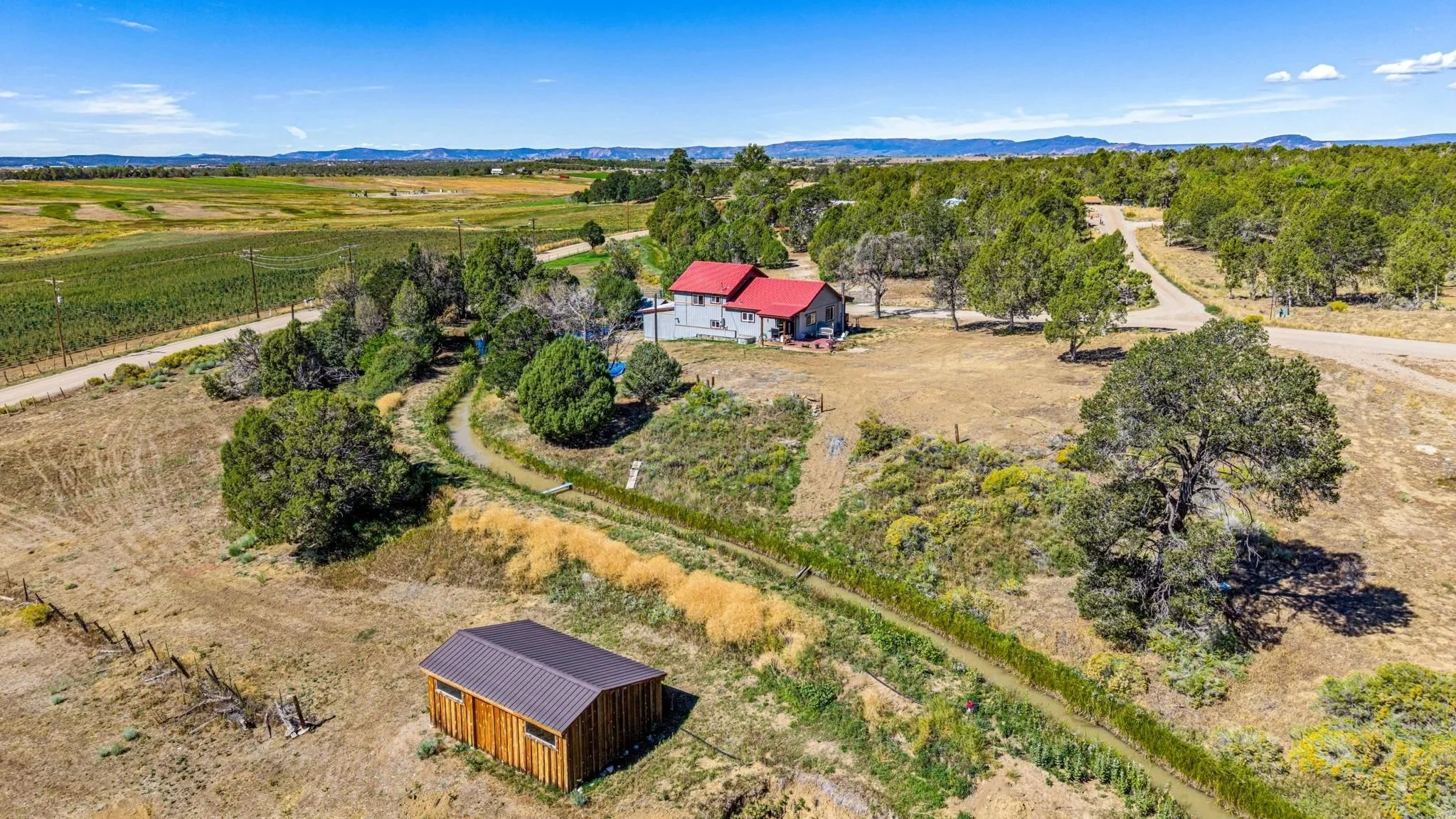
Nobody tells you your well may matter more than your kitchen.
But when you are buying rural or semi-rural property in La Plata County, the way water reaches the property—and what you are legally permitted to do with it—can affect everything from your daily routine to your long-term plans for the land.
A listing may mention a private well, water tap, irrigation water or some combination of the three. These terms are not interchangeable. Each water source serves a different purpose, comes with different documentation and requires its own due diligence.
Before falling in love with the pasture, garden space or mountain views, here is what buyers and sellers should understand.
A Private Well
A private well draws groundwater from beneath the property. In Colorado, wells are regulated through the Colorado Division of Water Resources, and the well permit determines how that water may legally be used.
Depending on the permit, allowed uses may include household water, livestock watering or limited outdoor irrigation. Buyers should never assume that a well can be used for every purpose simply because it exists.
Questions to investigate include:
Is there a valid well permit?
What uses does the permit allow?
Is the well currently operating?
How deep is it?
When was the pump last serviced?
Has a recent flow or production test been completed?
Has the water been tested for quality?
Is the well shared with another property?
Has its performance changed during dry years?
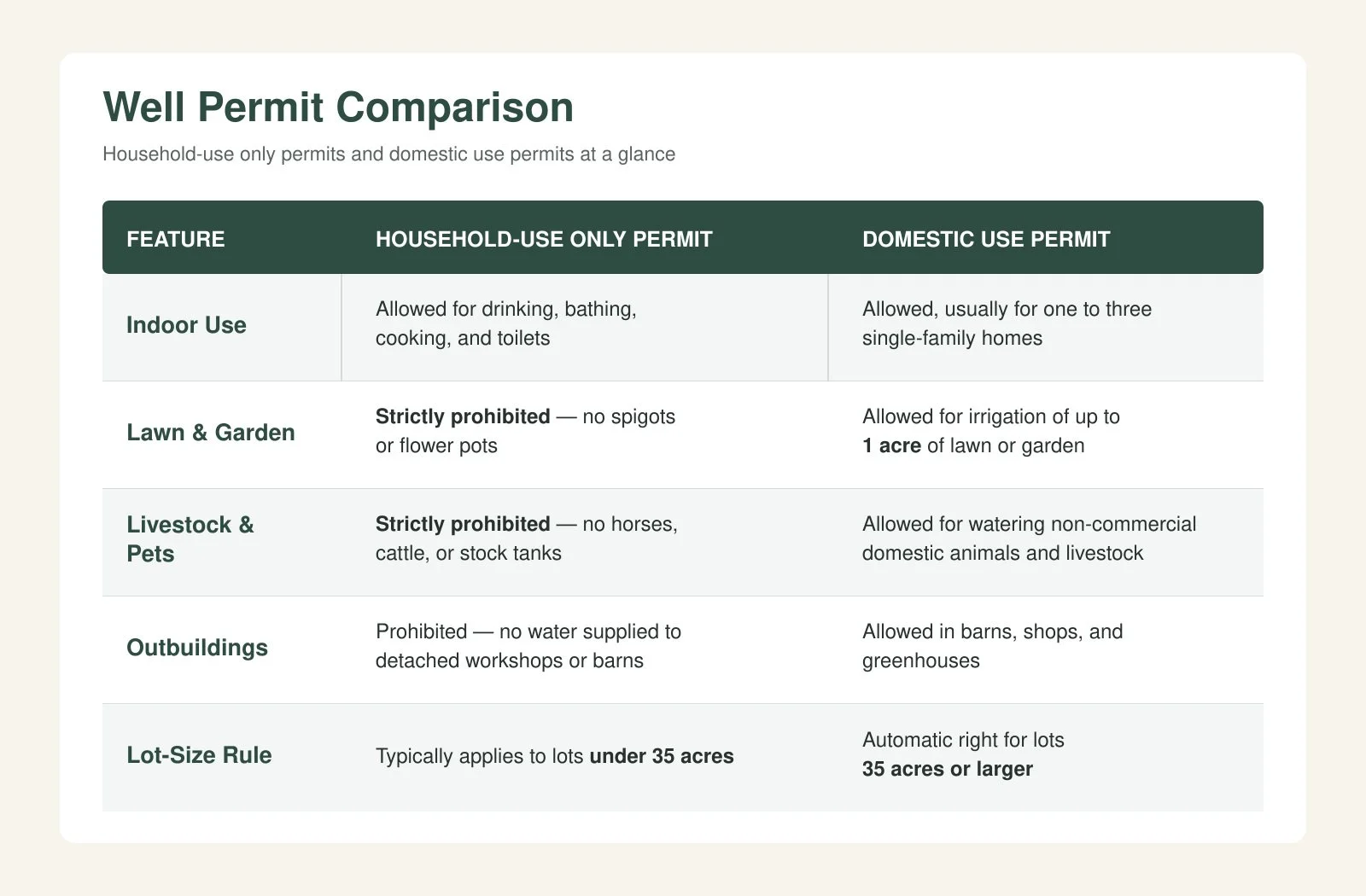
Generally residential wells are classified as Domestic or Household use. Household well can only use water inside the house and domestic wells can also be used for limited outside use.
The state’s Colorado Well Permit Search can help locate available permits and supporting records. La Plata County also operates a water-quality laboratory that provides testing for private wells and public water systems.
A permit tells you what the well is authorized to do. A production test helps determine what it is currently capable of doing. Those are two different questions, and buyers should investigate both.
A Water Tap
A water tap connects a property to a municipal, district, association or private water system. Instead of relying on groundwater produced by an individual well, the property receives treated water from the provider.
In southeastern La Plata County, some properties are served by the La Plata–Archuleta Water District. District rules, service availability and tap ownership should be verified directly with the provider. For example, the district’s service plan generally limits service to one tap for each legally formed lot. Additional information is available through the La Plata–Archuleta Water District.
When evaluating a water tap, buyers should confirm:
Which provider serves the property?
Is the tap installed and currently supplying the home?
Does the tap transfer with the property?
Are there transfer fees, monthly charges or usage limits?
Are there unpaid balances or assessments?
Who owns and maintains the service line?
Can the tap serve an additional dwelling unit or other future improvement?
A tap may offer the consistency of a managed water system, but it does not automatically include permission to irrigate acreage or water livestock. Those uses must be verified separately.
Irrigation Water
Irrigation water is generally used for pasture, landscaping, crops or other agricultural purposes. It may be represented by a decreed water right, ditch-company shares or another documented interest.
A ditch share represents an interest in the company and its water—not a promise of a fixed amount arriving on a fixed date. Delivery may be affected by the right’s priority, annual snowpack, runoff, precipitation, ditch conditions and the company’s operating schedule.
As Colorado State University Extension explains, ditch-company shares quantify an ownership interest in the company’s decreed water rights. The deed, stock certificate, company records and title work must all be reviewed to understand what is actually being conveyed.
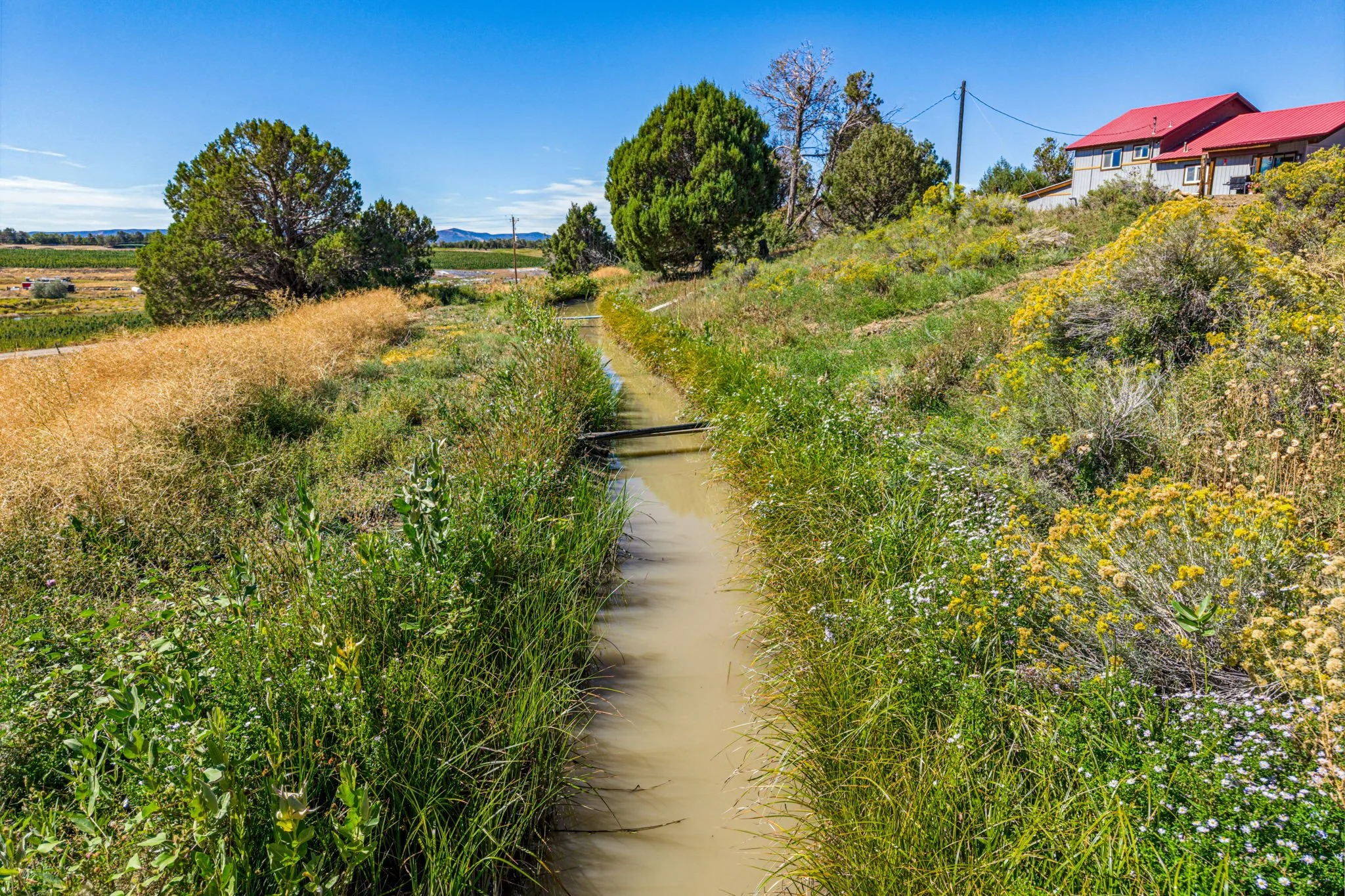
Buyers should investigate:
What water right or ditch-company interest is included?
How many shares—or what fraction of a share—will transfer?
Is the ownership documented by a certificate, deed or both?
Where is the approved place of use?
How much acreage has historically been irrigated?
How does water physically reach the property?
Who maintains the ditch, lateral, headgate and equipment?
Are annual assessments charged?
Are any assessments delinquent?
What is the typical delivery season?
Are there easements allowing access for maintenance?
Does the title commitment properly identify the water interest?
The Water Information Program is an excellent local resource for learning more about Southwest Colorado ditches, diversions and water rights.
Water Rights and Water Delivery Are Not the Same
This is one of the most important distinctions for rural-property buyers.
Documentation may establish an ownership interest or legal right, but that does not guarantee that water will arrive continuously, reach every part of the property or be delivered without additional work.
The physical system matters. Buyers should examine the ditch or lateral, headgate, pipes, pumps, sprinkler heads and distribution pattern. They should also ask about historical use and how the system performed during dry years.
In Southwest Colorado, irrigation is generally seasonal. The timing and quantity available can change with precipitation, winter snowpack, spring runoff and senior water demands.
The safest question is not simply, “Does the property have irrigation?”
It is:
“What documentation is transferring, what does it legally allow, and how does the water physically reach the land?”
One Property, Three Separate Water Resources
A current property at 3985 County Road 510 near Durango provides a helpful real-world example.
The home is currently supplied by a La Plata–Archuleta Water District tap. The property also includes a private well permitted for household use and separate irrigation rights associated with the land.
The irrigation interest is documented through King Ditch Consolidated Ditch Company Certificate No. 1889, representing two-twentieths of a share through the Hi Line Lateral. The irrigation may be used across as many as two acres, including the fenced pasture, and is currently distributed through two sprinkler heads.
As with other irrigation properties in the area, the delivery season and available supply depend on precipitation, snowpack and runoff. The parties are also working to verify ongoing assessments and lateral-maintenance responsibilities. Land Title is reviewing the deed and certificates so the applicable water rights and permits can be properly addressed for transfer.
That process illustrates why the phrase “water included” is not enough.
The tap, well and irrigation interest are three separate resources with different documentation, allowed uses and infrastructure. Understanding each one gives a buyer a much clearer picture of how the property can support daily living, animals, pasture and future plans.
What Buyers Should Do Before Closing
For any La Plata County property involving a well, water tap or irrigation, consider making these items part of your investigation:
Obtain the well permit and confirm its allowed uses.
Complete appropriate well-production and water-quality testing.
Confirm the tap provider, account status, transfer process and fees.
Review deeds, certificates and title documents for irrigation rights.
Contact the ditch company or water association directly.
Inspect the physical delivery and distribution system.
Confirm maintenance responsibilities, easements and assessments.
Investigate historical use and performance during dry seasons.
Consult the appropriate water professional or attorney when ownership or allowed use is unclear.
What Sellers Should Prepare
Water documentation can become a valuable part of presenting a rural property—but only when it is organized and accurate.
Before listing, sellers should gather:
Well permits and available testing records
Pump and treatment-system service history
Water-tap documentation and recent statements
Ditch certificates and recorded water-right documents
Assessment and payment history
Maps showing wells, ditches, laterals and irrigated areas
Shared-well, ditch-maintenance or access agreements
Notes explaining how the irrigation system is operated
Providing these records early can answer buyer questions, reduce uncertainty and help prevent avoidable delays during the transaction.
Frequently Asked Questions About Water in La Plata County
Is a private well the same as having water rights?
No. A well permit authorizes specific uses of groundwater under stated conditions. Irrigation or other water rights are separate interests with their own documentation and limitations.
Can I use a household well to irrigate pasture or water animals?
Not necessarily. The well permit controls how the water may legally be used. Buyers should review the actual permit rather than assuming outdoor irrigation or livestock watering is allowed.
What is the difference between a water tap and a well?
A well draws groundwater from beneath the property. A water tap connects the property to a municipality, district, association or private water system. Each has different ownership, maintenance, cost and transfer considerations.
Does a water tap allow me to irrigate acreage?
Not automatically. A tap’s permitted uses and consumption limits are determined by the provider. Irrigation water is commonly based on separate water rights or ditch-company shares.
Do irrigation rights automatically transfer when a property is sold?
They should never be assumed to Irrigation rights do not transfer automatically. They require a deed to properly transfer, certificates, title work and ditch-company records should identify exactly what is being conveyed and whether additional transfer documents are required.
Does owning a ditch share guarantee a certain amount of water?
No. A share represents an interest in the ditch company and its water rights. Actual delivery can vary based on priority, available supply, snowpack, runoff, infrastructure and company operations.
What water documents should I request before buying?
Request the well permit, available well-production and water-quality reports, tap documentation, irrigation certificates, recorded water-right documents, assessment history, maintenance agreements and any maps showing wells, ditches, laterals or irrigated acreage.
Who should verify water information?
Depending on the property, verification may involve the Colorado Division of Water Resources, the water provider, ditch company, title company, well professional, water attorney and qualified inspector. Your real estate broker can help organize the investigation, but legal rights, water quantity and future availability require appropriate professional verification.
The Bottom Line
When buying rural property in La Plata County, “Where does the water come from?” is only the first question.
You also need to know what documentation exists, what uses are allowed, how reliably the water has been delivered and what obligations will transfer with the property.
A kitchen can be remodeled. Water is far more difficult to change.
If you are considering a rural property in Southwest Colorado, I can help you identify the right questions, organize the available documentation and connect you with the appropriate local professionals before you make a decision.
This article is intended for general educational purposes and is not legal, engineering or water-rights advice. Water rights, well permits, tap rights, water quality and delivery conditions should be independently verified for each property.