Is Durango Running Out of Water? Lessons from the Front Lines
What is the state of water in Durango for 2026? Insights from the 42nd Annual SWCD Seminar reveal that while snowpack is at historic lows, the City of Durango's senior water rights provide a critical buffer for residents.
Before I moved to Colorado almost a decade ago, I had a very simple view of water: you turn the handle, it comes out of the faucet, and that’s it. I assumed it would always be there. After living here and serving this community, I’ve learned there is so much more to the story. I recently attended the Southwestern Water Conservation District’s 42nd Annual Water Seminar in Ignacio so I could bring that story back to you. What I found was a "Micro-to-Macro" map of our future, one where the message is clear: “Community and water go hand in hand” as shared by Katrina Grantz.
Who actually "owns" the water in our rivers?
If you live in town, it’s easy to feel disconnected from the "dry side" of the county. But our water is part of a massive, 17-state puzzle managed by the Bureau of Reclamation among others.
The Regional Wholesaler: We heard from Katrina Grantz of the Bureau of Reclamation.
In Practical Terms: Think of the Bureau as the "Wholesaler." They own the massive "warehouses" (like Lake Powell) and the "delivery trucks" (the tunnels) that move water across the West. They are also the 2nd largest producer of hydroelectric power in the U.S.—literally keeping the lights on while they keep the water flowing.
The Local Advantage: Locally, Laura Rieck from the City of Durango shared our city holds Senior Water Rights to both the Animas and Florida Rivers.
In Practical Terms: Being "Senior" means we are at the front of the line. This position allows us to store about 5 million gallons per day for our residents.
Why does my water bill spike?
Here is the irony: The City is exceptionally good at managing our "Senior" water, but we, the public, are... unpredictable. Laura noted that whenever the City posts a water conservation tip on social media, consumption levels actually spike within hours. It’s as if seeing the word "water" reminds everyone to go home, do three loads of laundry, and fill every water bottle!
The "Mountain Sponge": Why snowmelt is changing
You might wonder why the river peaks earlier some years than others besides the obvious, less snow falling. Scientists like Jeff Derry from the Center for Snow and Avalanche Studies and Scott Roberts from the Mountain Studies Institute, share some sobering data about our current “Mountain Sponge".
The “Skimpy” Snowpack: As of mid-March 2026, we are looking at one of the lowest snowpacks since 1987. While the snow has been "dust-free" so far—a rare boon for the San Juans—Jeff noted that a lack of storms means a lack of snow.
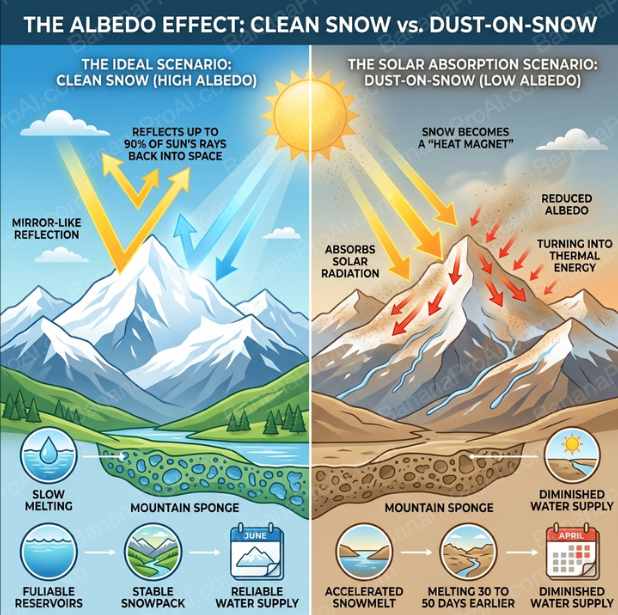
The Albedo Effect: Albedo is a measure of reflectivity. Clean, white snow has a high albedo, meaning it reflects up to 90% of the sun’s energy away from the mountains. This keeps the "sponge" cool and the water locked in the snowpack for longer.
Dust-on-Snow: When dust settles on our peaks, it lowers the albedo. Like a dark shirt in the sun, that dusty snow begins to absorb heat instead of reflecting it. In extreme years, this "solar absorption" can accelerate the spring melt by up to 50 days, sending our water downstream before we are ready to catch it.
The Watershed Filter: Scott Roberts emphasized that our forests act as the primary "filtration system." Healthy root systems slow down runoff and filter out sediment. However, after events like the 416 Fire, monsoon rains can wash ash into our rivers—a phenomenon known as turbidity—which makes water treatment much more complex and costly.
Stewardship: Three Strategic Pillars for Your Property
In real estate, we focus on ADUs (Accessory Dwelling Units)—those guest houses that add value. But this seminar reminded me of a different, equally important ADU: Average Daily Use.
In Practical Terms: Think of the Accessory unit as the bucket, and the Average Daily Use as the water inside it. To protect your property’s "bucket," I encourage you to look through these three lenses:
Audit Your Exterior Footprint: Look at your outdoor spaces. Could transitioning toward climate-appropriate, native landscaping reduce your property's "water debt" while enhancing its curb appeal?
Optimize for Precision: Explore smart technology, like moisture sensors or drip irrigation, to ensure water goes to your roots, not your driveway.
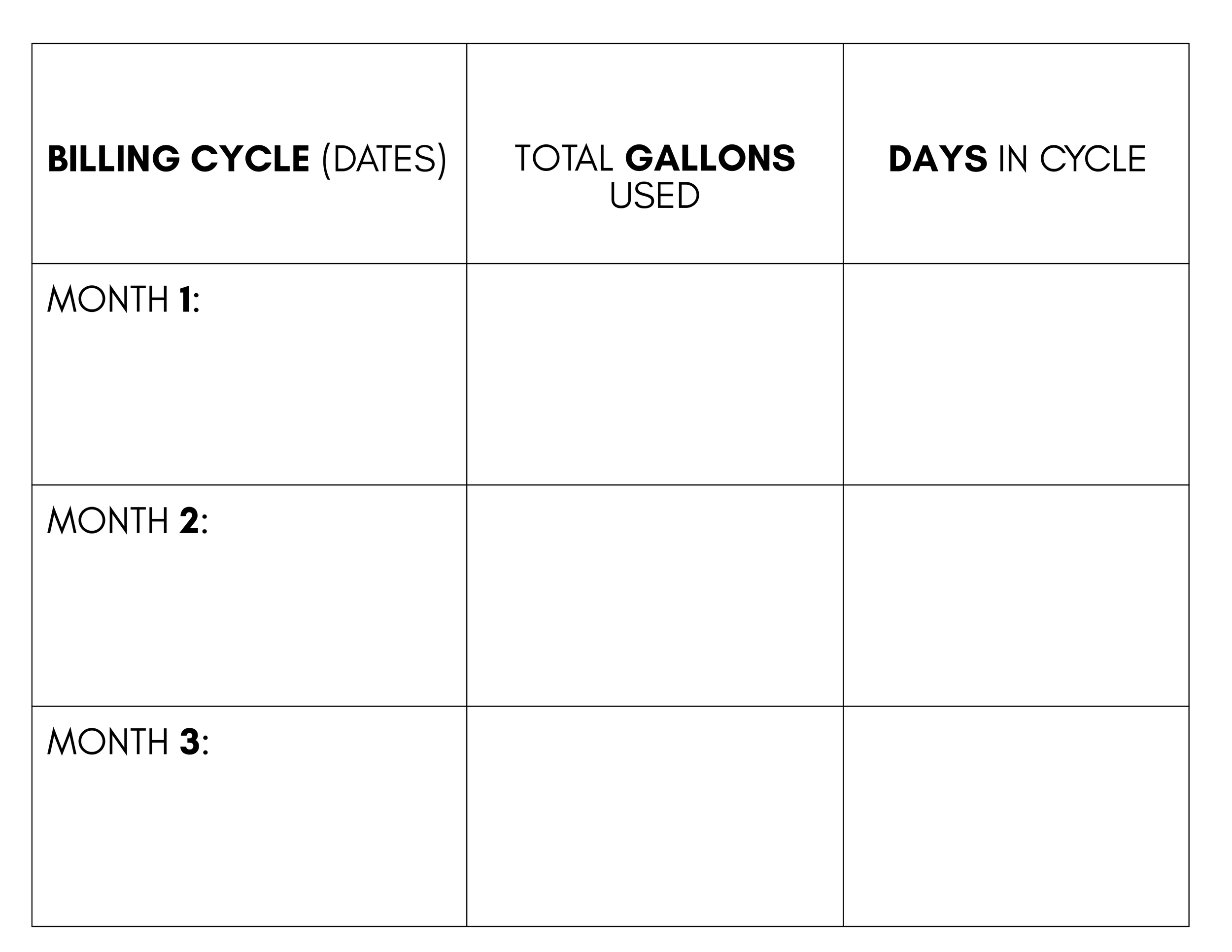
Master Your Household Logistics: Know your number. Calculate your Household ADU (Total Monthly Gallons ÷ Days in Cycle). Security comes from having clear data, not just hoping the tank is full.
The Producer’s Truth: Our Ranching Legacy
We cannot talk about water without honoring the current stewards: our Ranchers and Farmers. For them, water is a livelihood and a legacy. Their working landscapes help recharge our groundwater, proving that we don't just "endure" challenges like the 416 Fire to the Gold King Mine spill—we adapt together.
Our resources are finite, but our capacity for connection is not. By acting with intention today, we ensure the Southwest Colorado lifestyle remains vibrant for the next generation.
Be well,
Coral
Update from the City of Durango as of April 2nd, 2026:
A Call to Resilience: Action from the City
The City of Durango has officially called for increased water conservation following a winter that left us with just 50% of our average annual snowpack—the lowest levels seen in over three decades. This scarcity, paired with forecasts for above-normal wildfire potential, makes our collective efforts more than just a "good idea"; they are essential for protecting the Florida and Animas Rivers.
While the scale of the drought feels massive, our impact starts with simple, high-integrity actions at home. For instance, toilets alone account for 30% of indoor water use, and a single hidden leak can waste over 200 gallons of water every day. You can check your own system by adding a few drops of food coloring to the tank; if color appears in the bowl after 20 minutes, a leak is present. Ensuring flappers are sealed and valves are functioning correctly is a small but powerful way to contribute to our community's long-term growth and resilience.